Simple Winter Technique for Sowing Hardy Native Seeds in Pots
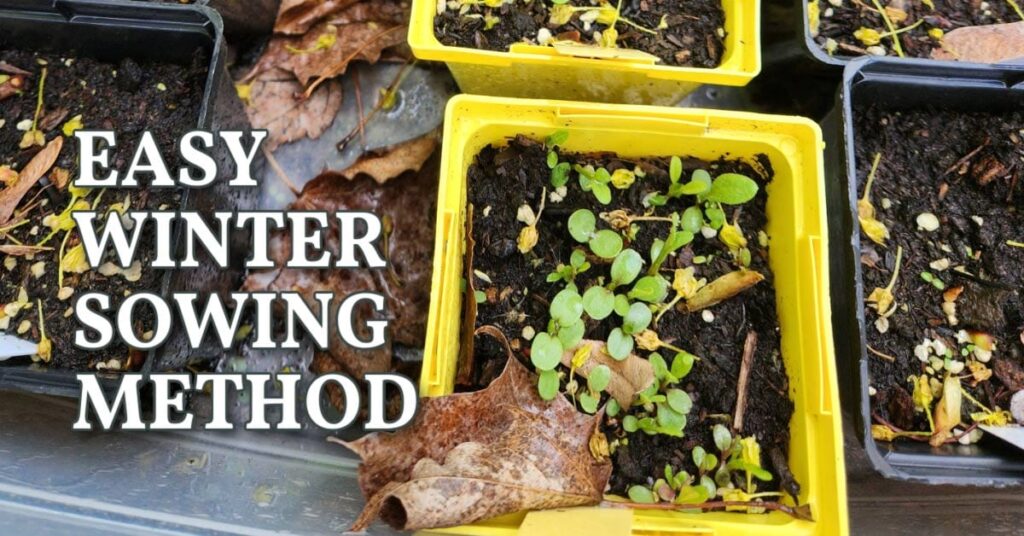
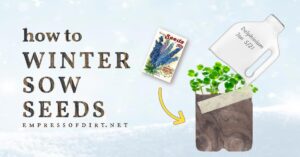
This straightforward technique sows hardy seeds in pots outside for winter, retains them from washing away, and lets pure chilly and moisture present the stratification they should sprout in spring.
One other well-liked technique is the winter sowing milk jug technique which can be utilized for any cold-tolerant seeds. Every technique has benefits and disadvantages relying on what you are attempting to develop.

Rising Native Vegetation From Seed

About This Technique
This technique is a straightforward solution to sow hardy seeds outside in pots. Winter gives the chilly and moisture these seeds want (“stratification“), whereas the pots shield them from washing away and {hardware} material stops animals from consuming them. By spring, the naturally stratified seeds will begin sprouting.
Are you prepared so as to add extra native vegetation to your backyard?
Many people are transitioning to native vegetation today for good causes.
By selecting native vegetation, we’re offering native wildlife with the identical plant species they’ve co-evolved with. These inter-dependent relationships between vegetation and animals are what deliver ecosystems to life.
Wildlife = animals in our gardens from microscopic to four-legged animals together with microbes, fungi, invertebrates, bugs, birds, mammals, amphibians, and reptiles.
To maintain that life, we’d like biodiversity. This implies not solely rising a various collection of native vegetation however guaranteeing every plant species additionally presents genetic variety.
Because of this rising from seed, or shopping for native vegetation grown from seed, is helpful. Sexual copy makes every seed one-of-a-kind—one thing you don’t get from cloning (rising from cuttings). It’s that genetic variety that brings resilience and adaptableness in difficult situations.
How do I discover the correct native seeds for my backyard?
- Step one is to discover a trusted supply to suggest native vegetation in your space. This can be a neighborhood conservation authority, extension workplace, native seed grower, or environmental group. The objective is to decide on indigenous vegetation that serve an ecological function—serving to maintain the native ecosystem.
- From there, you need to slim down your alternatives to go well with your particular rising situations together with soil kind, water and drainage, gentle, house accessible, in addition to aesthetics.
Most of us reside in developed areas the place the native soil is lengthy gone. The very best native plant decisions will go well with our present situations requiring few if any inputs like supplemental watering or fertilizers.

Find out how to Sow Native Seeds

Native vegetation that originate in chilly climates are geared up to outlive winter situations. The vegetation produce seeds that ripen and drop to the bottom in fall, endure the whole lot winter can throw at them for months on finish, and, finally, germinate.
Besides it’s not that excellent.
Most seeds by no means germinate for any variety of causes. Some are duds. Some land the place they’ll’t sprout. Animals eat them. Rain washes them away. And so forth.
And that’s why vegetation produce such an abundance of seeds—it will increase the chances of profitable offspring.
The excellent news for us is, we don’t need to sow 1000’s of seeds to develop a dozen. As an alternative, we are able to shield what we sow (see under) whereas nonetheless exposing the seed to the situations they want.
Earlier than You Begin
These directions come from my very own trials and observations shared by different gardeners. As a result of we solely get one winter per yr—and each behaves in another way—it’s laborious to run a number of managed assessments. To this point, I’ve targeted on sun-loving native flowering perennials and have had wonderful outcomes with this technique.
Timing
Late fall or early winter is the time to sow native seeds outside in pots.
Most seeds will want a minimum of just a few months of winter publicity.
Some native seeds germinate after one winter; others take a yr or longer and/or might not flower till their second yr.

Seeds

Which Seeds This Works For
This pot-outdoor technique works finest for hardy seeds—particularly native perennials that naturally sprout after winter. Some seeds that don’t want chilly stratification might also work, however frost-tender or warmth-loving seeds usually received’t. All the time verify your seed packet for clues like “fall sowing,” “chilly stratification,” or “direct sow in early spring.”
Native seeds from chilly climates can survive winter outside.
Whereas some simply chill within the chilly climate, insulated by leaves and snow, others particularly want moisture to melt their powerful seed coats together with chilly stratification. This explains stratification intimately.
Whereas the strategy described under is identical for sowing all native seeds, it’s at all times sensible to learn the seed packet to verify for any particular sowing directions. Some actually powerful seeds might also want scarification (nicking the seed coat) previous to sowing.
Suggestions For Sowing Native Seeds
- The best native seeds to germinate are from vegetation that develop finest in full solar.
- Essentially the most difficult native vegetation to sow from seed come from shade vegetation in addition to bushes and shrubs.
- If a local seed is tiny like a speck of mud, it possible wants gentle to germinate. This implies you sow it on the soil floor.
- If saving your personal seeds, ensure they’re utterly ripe earlier than harvesting in any other case they won’t be viable. This has extra on the correct time to reap seeds right here.
Native Seed Ideas (if suited to your area)
Many of those vegetation are native to elements of Canada and the USA (in colder areas). All the time verify trusted native plant lists before you purchase or sow.
- Asters (Symphyotrichum spp.)
- Beardtongues (Penstemon spp.)
- Bee balm (Monarda and Bergamot)
- Black-eyed Susan (Rudbeckia spp.)
- Blazing star (Liatris spp.)
- Blue flag iris (Iris versicolor)
- Blue lobelia (Lobelia cardinalis, L. siphilitica)
- Blue vervain (Verbena hastata)
- Columbine (Aquilegia spp.)
- Coneflower (Echinacea spp.)
- Goldenrod (Solidago spp.)
- Ironweed (Vernonia spp.)
- Joe Pye weed (Eutrochium purpureum)
- Milkweeds (Asclepias tuberosa, A. incarnata) Butterfly, swamp, and extra.
Gradual to Germinate
These are examples of native seeds that take two years to germinate. In the event you sow them, be ready to maintain the pots for the lengthy haul.
- Basswood (Tilia americana)
- Bellwort (Uvularia grandiflora)
- Blue-bead lily (Clintonia borealis)
- Canada mayflower (Maianthemum canadense Desf.)
- False solomon’s seal (Maianthemum racemosum)
- Trillium (Trillium spp.)
- Viburnum (Viburnum spp.)
- Wild ginger (Asarum canadense L.)
- Witch hazel (Hamamelis virginiana)
Provides

- Native seeds | Native to your area, suited to your rising situations.
- Pots or trays | At the least 3-inches deep
- Marker and Tags | To label your pots
- Potting combine | There are many opinions on which is finest: potting combine, potting combine with compost, or backyard soil. I exploit potting combine.
- Masks | Put on a masks to keep away from inhaling high-quality particles from potting combine and soil
- Topping (non-obligatory) | Some gardeners high the pot with a high-quality layer of sand, grit, or sawdust to assist hold the seeds in place. I simply use potting combine.
- Bin | To carry your pots. I add drainage holes to the bin, in any other case the pots turn out to be waterlogged with rain or melting snow in spring.
- {Hardware} material | To cowl the pots and hold animals out. I exploit scraps of {hardware} material or squirrel screens.
- Rocks or Bricks | To carry {hardware} material or display in place.
Steps
- Moisten potting combine with water. It ought to be moist sufficient to kind a clump when grasped in a ball however not so damp that it drips extra water.
- Fill pots with moist potting combine, gently urgent it down as you go to take away air pockets. Depart one-half inch at high for watering. Sit pots in bin.
- Sow seeds at advisable depth (usually as deep because the seed is extensive).
Seed Spacing Suggestions
The very best spacing between seeds is decided by the kind of seed and your preferences as they develop.
- If germination charges are usually low, it is sensible sow bigger portions.
- If germination charges are excessive, fewer seeds are wanted.
Some gardeners wish to sow plenty of seeds in a single pot—dozens and even lots of—and skinny them out later. I desire to sow only a few in every pot. The price of seeds provides up and I don’t like thinning them. Do what you like.
- Water newly sown seeds.
- Non-compulsory: sprinkle high-quality layer of sand, grit, or sawdust over floor to assist hold seeds in place.
- Place bin (with pots) outside ideally in shade (not direct solar) away from overhangs (that might drip water).
- Cowl with {hardware} material or squirrel display held in place with rocks or bricks to carry display in place.

Upkeep

Set reminder in your telephone to verify on pots each few days. Snow, rain, hail,—it’s all high-quality—you simply don’t need the climate to upset the pots, animals to get at them, or the potting combine to dry out.
In case your bin doesn’t have drainage holes, you might also must routinely pour out any extra water.
What to Count on

After weeks or months, because the climate warms and the times turn out to be longer in spring, some seeds will begin to germinate.
Others might take months or longer—even seeds of the identical species range with their timing.
Not like the winter sowing technique utilizing closed containers like milk jugs that act like little greenhouses, these seeds received’t sprout till outside situations are favorable.
Transplanting
As time passes, you’ll finally have pots full of younger vegetation.
Relying on the timing, it’s possible you’ll separate the clumps and provides every plant (or small cluster of vegetation) their very own bigger pot, or plant immediately within the floor.
Some gardeners wish to hold the younger native vegetation in pots till fall planting time or maintain off till the next yr. I wish to hold them in pots till they’re robust, younger vegetation which might usually take a yr or so.
Regularly Requested Questions
Whilst you can broadcast seeds, it’s not probably the most profitable method. That’s how nature does it however it’s additionally true that few find yourself germinating. As an alternative, sow your seeds in pots and hold them outside with display overtop to guard them from animals and different threats. Uncovered to winter climate, most will germinate when the time is correct in spring. Gradual growers will sprout the next yr.
Essentially the most cost-effective solution to develop native vegetation is to start out the vegetation from seed. Sowing seeds in pots uncovered to winter situations however protected against animals gives the very best germination charges with the least effort.
Until you’ve particular permission, taking native vegetation or seeds (or anything) from wild areas, whether or not public or non-public property, will not be permitted. It’s usually unlawful and thought of dangerous or unethical. However in fact gather seeds from your personal backyard and ask mates as properly.
Sources
Learn Extra
Book

Winter Sowing
A Distinctive Milk Jug Technique to Begin Seeds Outside Throughout Chilly, Snowy Months
by Melissa J. Will
About This Book | Go to Book Store
This e-book is a digital file (PDF format) you save to your system. It’s not a bodily product.
PayPal, Credit score Card, Apple Pay
Eco-Useful Gardening Books
I like to recommend these books as a result of they get gardeners enthusiastic about ecological gardening and the unimaginable relationships between vegetation and animals. Our future is in our fingers!
1 The Pollinator Victory Backyard | Kim Eierman | Win the Struggle on Pollinator Decline with Ecological Gardening; Appeal to and Assist Bees, Beetles, Butterflies, Bats, and Different Pollinators
2 A Backyard for the Rusty-Patched Bumblebee: Creating Habitat for Native Pollinators: Ontario and Nice Lakes Version | Lorraine Johnson, Sheila Colla | All the data gardeners must take motion to help and shield pollinators, by creating habitat in yards and neighborhood areas, on balconies and boulevards, all over the place!
3 The Gardener’s Information to Native Vegetation of the Southern Nice Lakes Area | Rick Grey and Shaun Sales space | Distills all the data important for rising 150 species of garden-worthy native vegetation right into a single, at-a-glance information.
4 Bringing Nature Residence: How You Can Maintain Wildlife with Native Vegetation | Doug Tallamy
5 Backyard Allies: The Bugs, Birds, & Different Animals that Hold Your Backyard Lovely and Thriving | Frederique Lavoipierre
6 The Humane Gardener: Nurturing a Yard Habitat for Wildlife (Find out how to Create a Sustainable and Moral Backyard that Promotes Native Wildlife, Vegetation, and Biodiversity) | Nancy Lawson
~Melissa the Empress of Filth ♛

Find out how to Sow Native Seeds Outside (Simple Winter Technique)
This simple technique improves germination charges for sowing native seeds in a chilly local weather. Begin in late fall to permit a adequate chilly, moist stratification interval.
Makes: 72 vegetation
Value: 20.00
Directions
-
Place 24 pots in bin.
-
Moisten potting combine with water and fill pots leaving roughly half-inch for watering.
-
Sow seeds at advisable depth (often as deep because the seed is extensive). See word relating to spacing.
-
Water if wanted to make sure potting combine is moist however not overly damp.
-
(Non-compulsory) Add high-quality layer of sand, grit, or sawdust to floor of potting combine to assist maintain seeds in place.
-
Cowl bin with {hardware} material secured with rocks or bricks to maintain animals out.
-
Place bin outside in shade or half shade away from overhangs that might drip water.
-
Set reminder on telephone to verify pots and water as wanted. Frequency ought to enhance as temperatures heat in spring.
-
When seedlings are a number of inches tall with a number of leaves, separate and transplant to bigger pots or plant in backyard.
Notes
Verify your seed packets for particular sowing recommendation, any advisable preparations like scarification, and anticipated germination charges.
Seed spacing: every gardener has their very own preferences. Some wish to sow bigger portions in every pot and skinny out the vegetation later. I discover that germination charges for many species are usually fairly good so I simply sow just a few seeds in every pot.
Care: some species will germinate in spring, others in summer time, and a few might not sprout till yr two. Be affected person and proceed watering pots as wanted. Even be aware of solar in every season: you need sufficient gentle for progress however the potting combine should not ever dry out.
Bin: I like to recommend creating drainage holes within the bin to forestall water (rain, melted snow) from pooling inside. Some vegetation won’t tolerate being waterlogged.
Hold notes to raised perceive what works finest in your circumstances.