How do frogs & toads spend the winter?

This put up was written by Algonquin Provincial Park’s Assistant Superintendent David LeGros.
Because the crisp fall days get colder and the occasional dusting of snow whitens the panorama, we all know that winter is simply across the nook.
For the numerous songbirds of our forests, they keep away from our chilly winters and lack of meals by migrating south.
Different animals are tailored to the chilly situations and should develop a thicker coat of fur or feathers. Some, we predict, have the enviable capability to sleep away the lengthy Ontario winter by hibernating.
What’s hibernation?
Hibernation entails the animal reducing its metabolism to a degree the place it makes use of little or no vitality; even its coronary heart price and physique temperature drop and so they sometimes don’t eat.
Many animals do that: from bears to leaping mice, turtles, and snakes; even many bugs lie dormant for the winter.
Chilly-blooded animals (who can not produce their very own physique warmth utilizing their metabolism) like reptiles and amphibians should hibernate in Ontario; it’s a lot too chilly to be energetic – they’d freeze stable and die. With a purpose to survive this troublesome season, they have to guarantee they discover simply the fitting place.
Frogs
Within the case of most frogs, the fitting place is underneath water. We regularly suppose that water, within the wintertime, may be very chilly. However as we discover out with the ice dice tray within the freezer, water is liquid till it’s frozen. If the water continues to be liquid, then it’s above freezing – however not by a lot!
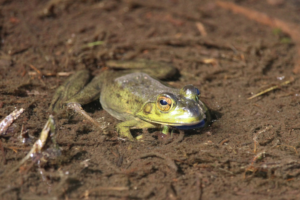
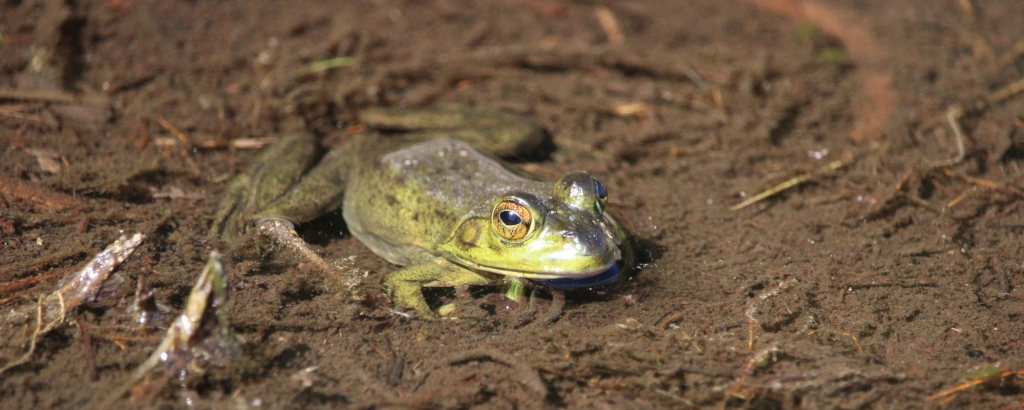
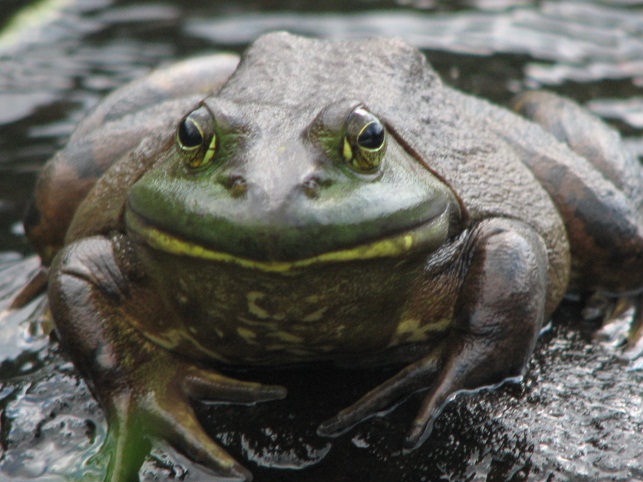
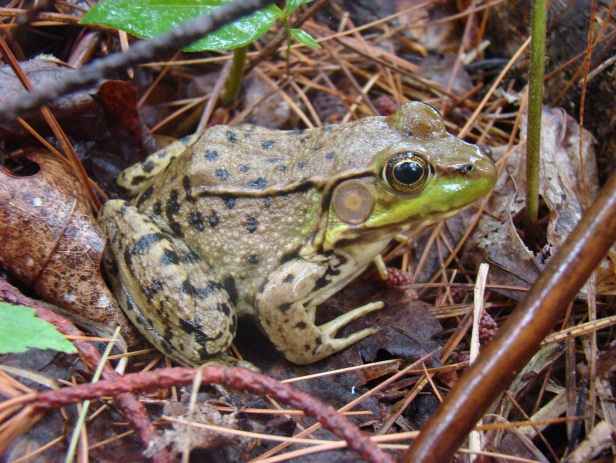
Lots of Ontario’s frogs, just like the Bull Frog, Inexperienced Frog, Mink Frog, and Pickerel Frog, hibernate within the water. Many suppose that these frogs would burrow into the muck on the backside of a pond or river to “hold heat” and keep hidden from predators.
Nevertheless it seems that – as a way to survive the winter underneath the ice – they should keep out of the mud as a result of…
…these frogs breathe by their pores and skin!
Very chilly (4°C) water holds extra oxygen than heat water, which is nice information for the frogs. They will merely soak up the little little bit of oxygen they want instantly from the water by their permeable skins.
In the event that they have been buried within the mud, the provision of oxygen would shortly get used up, so that’s the reason they keep uncovered on the underside, or maybe nestled amongst rocks, logs or roots – to get a continuing provide of oxygen from shifting water.
Toads
Toads generally discovered on trails and gardens, just like the American Toad, hibernate on land. The forests and fields actually do freeze, and even the soil freezes, so toads should discover a place that escapes the frost.
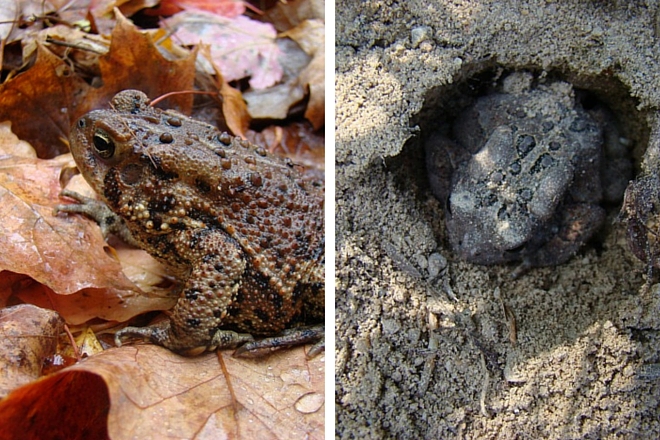
To do that, they dig! Toads have particular, hardened knobs on their hind toes that assist them dig into the soil. They have to dig down, usually over 50 cm into the soil, to get under the frost line, the place they’ll spend the winter.
Solely as soon as the soil temperature warms within the spring will they know their cue to emerge once more.
Frozen frogsicles?
Just a few different frogs take care of chilly temperatures a bit otherwise – they’ve discovered a method to turn into the chilly! Our Wooden Frog and the three species of tree frog present in Ontario (Grey Treefrog, Spring Peeper, and Refrain Frog) are literally freeze-tolerant.
Earlier than we get visions of frog-sicles, know this: these frogs freeze otherwise than, let’s say, a hotdog. These tree frogs and wooden frogs hibernate in leaf litter or underneath bark – someplace that’s not actually insulated from freezing temperatures.
As soon as temperatures are as little as -5°C, tiny ice crystals type within the physique, freezing roughly 40% of the physique’s water content material.
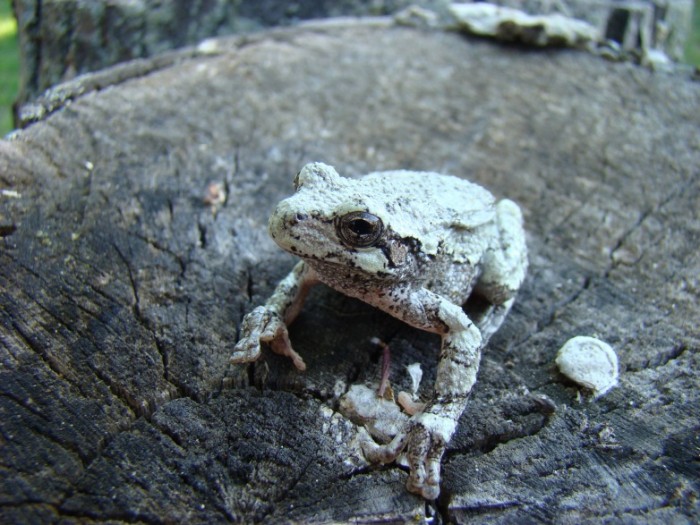
On this situation, the frog now not breathes, no blood flows and there’s no heartbeat – it might as properly be useless. As soon as spring arrives, the frog thaws – typically in as little as a day – and should hop away.
Different animals can not freeze and cheat winter on this method; ice crystals severely harm cells often inflicting dying.
So, subsequent time you see a frog within the spring, know that it needed to survive some robust situations from the earlier winter – and that’s one thing to sing about!
Need extra enjoyable frog details?
Learn extra on our weblog put up, Are you pals with frogs?